
Wooster Previous Residents by Era
Previous residents leave different evidence in different periods. A current Auditor record establishes the parcel. The Recorder establishes recorded land actions. Directories and the census add time-bounded household clues, while maps and newspapers test whether an address or building existed in the form assumed. The table keeps those roles distinct. A source that shows an owner, directory name, or map label should not be stretched into a complete account of who lived there.
| Source | Years It Covers | Where Held | What It Shows |
|---|---|---|---|
| Auditor parcel and GIS systems | Current system; no historic online start stated | Wayne County Auditor and GIS | Parcel, situs, legal, tax, sales, and map context |
| Recorder official records | County records; online cutoff not published | Wayne County Recorder and Real Property Official Records | Recorded deeds, parties, instrument references, and legal descriptions |
| Wooster directories | 1873, 1897, 1884-85, 1900, 1904 through 1923-24, and 1948 verified points | WCPL and local-history source trail | Dated name, address, affiliation, and street clues |
| Sanborn maps and atlases | 1873, 1897, and downtown Sanborn views from 1884 | WCPL, WDHP, and Ohio History Connection | Ward, block, building, and street-layout context |
| Federal census and newspapers | Census released through 1950; newspaper runs vary | Library databases and WCPL archive | Household snapshot or dated notice, not an unbroken stay |
For a twentieth-century house, begin in the present and work backward. For an earlier question, begin with the atlas, directory, or map date that fits, then connect it to the parcel legal description. The Wayne County Public Library Genealogy and Local History Room is the local fallback when an older volume, deed-index entry, or newspaper notice needs a human reading.
Wooster Parcel Records Before Names
Begin a Wooster previous-residents search with the Wayne County Auditor Property Search. Search by owner, address, or parcel number. On the parcel page, preserve four separate facts: the parcel or PIN, full legal description, situs address, and tax mailing address. The situs is the physical property location. A tax mailing address can belong to a post-office box, business, family contact, or another location. It is never a substitute for the situs or a household roster.
The Legal and Tax Map Information material matters when old house numbers stop matching a modern address. A lot split, subdivision plat, or changed street pattern can place one deed across more than one parcel. The County Tax Map Office at 428 W. Liberty Street maintains county street addresses and tax survey maps, so it is the right counter when address continuity is unclear. A postal Wooster label can also fall outside city limits, making the township or municipal field part of the record trail.
Note: Keep the parcel, legal description, situs, and mailing field in separate notes so a later search does not blend four different facts.
Wooster Transfer Records Are Clues
The county’s Parcel Transfer History system is a fast bridge from a current parcel to likely transfers. Its guide describes a ten-digit PIN format with a dash after the second digit and a decimal after the seventh, such as 37-00019.001. Owner-name searching accepts any part of a name and can use multiple pieces to narrow results. Township or corporation and map-page routes can help when an address has changed shape.
That convenience comes with a firm boundary. Transfer History says its data is a reference guide and not intended for legal use. Treat a transfer result as a locating clue, then verify the title event in the Recorder’s instrument. A sale price or transfer line alone does not supply a complete chain of title, and a person shown in an ownership record is not automatically one of the previous residents.
The county Transfer History interface illustrates the Wooster previous-residents bridge from parcel research to dated transfer clues.
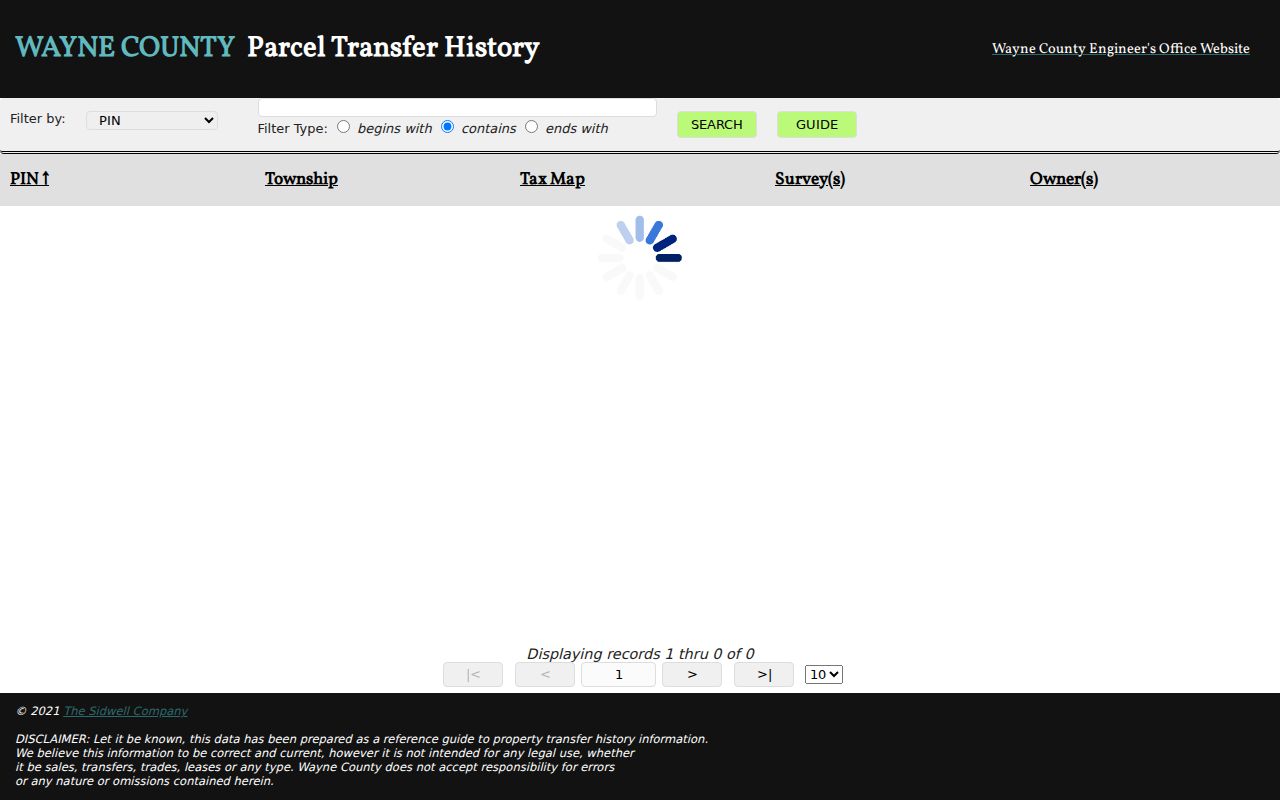
Use its result only to carry a PIN, name, date, or reference into the authoritative deed search.
Wayne Deed Chain for Wooster Previous Residents
The title trail is a backward loop, not a simple owner list. With the parcel and legal description in hand, use the recorder-directed Real Property Official Records service after selecting Wayne County. Locate the newest conveyance into the current grantee. The recorded instrument supplies the party names, recording date, book and page or instrument number, and legal description that let the next search stay tied to the same land.
- Open the Auditor parcel and retain its PIN, full legal description, situs, and separate tax-mailing field.
- Use Transfer History to identify a likely latest conveyance, but label that reference as nonlegal.
- Find the current grantee’s deed in the Recorder index and record grantor, grantee, recording date, book/page or instrument number, and legal description.
- Search that prior grantor as a grantee near the earlier acquisition date, then repeat the capture for each inbound deed.
- Compare plats, lot changes, and the legal description before assuming the same street address marks the same parcel.
- Grantor
- The person or entity transferring an interest in the recorded deed.
- Grantee
- The person or entity receiving that recorded interest.
- Chain of title
- The linked series of recorded transfers for the same land, checked from each deed back to the prior one.
- Legal description
- The lot, block, subdivision, survey, or similar land description that ties a deed to property more reliably than a street address.
One buyer may acquire several parcels in one instrument. That is why the description and parcel relationship must be checked at every link. A deed chain can explain prior owners. It does not by itself show every past household.
Wooster Deed Records Beyond Web
Wayne County has not published a comprehensive online start year for its Recorder index, so an online non-match should never be treated as proof that no deed exists. The Recorder records deeds, mortgages, liens, and subdivision plats. For an older instrument, bring the party names, estimated recording date, legal description, PIN, and any book/page or instrument reference to the Recorder at 428 W. Liberty Street, Wooster. Staff can identify the public-terminal, scanned-image, microfilm, or physical-volume route.
The office lists weekday hours of 8:00 a.m. to 4:30 p.m. and phone number (330) 287-5460. A focused request under the Ohio Public Records Act, Ohio Revised Code 149.43 is another fallback when it names a document, party, date, book/page, or legal description. Ask for a defined record rather than a staff-created property-history search. WCPL also links the Wayne County Deed Index for historical work.
Wayne County Recorder information identifies the office that preserves the deed instruments behind a Wooster previous-residents trail.
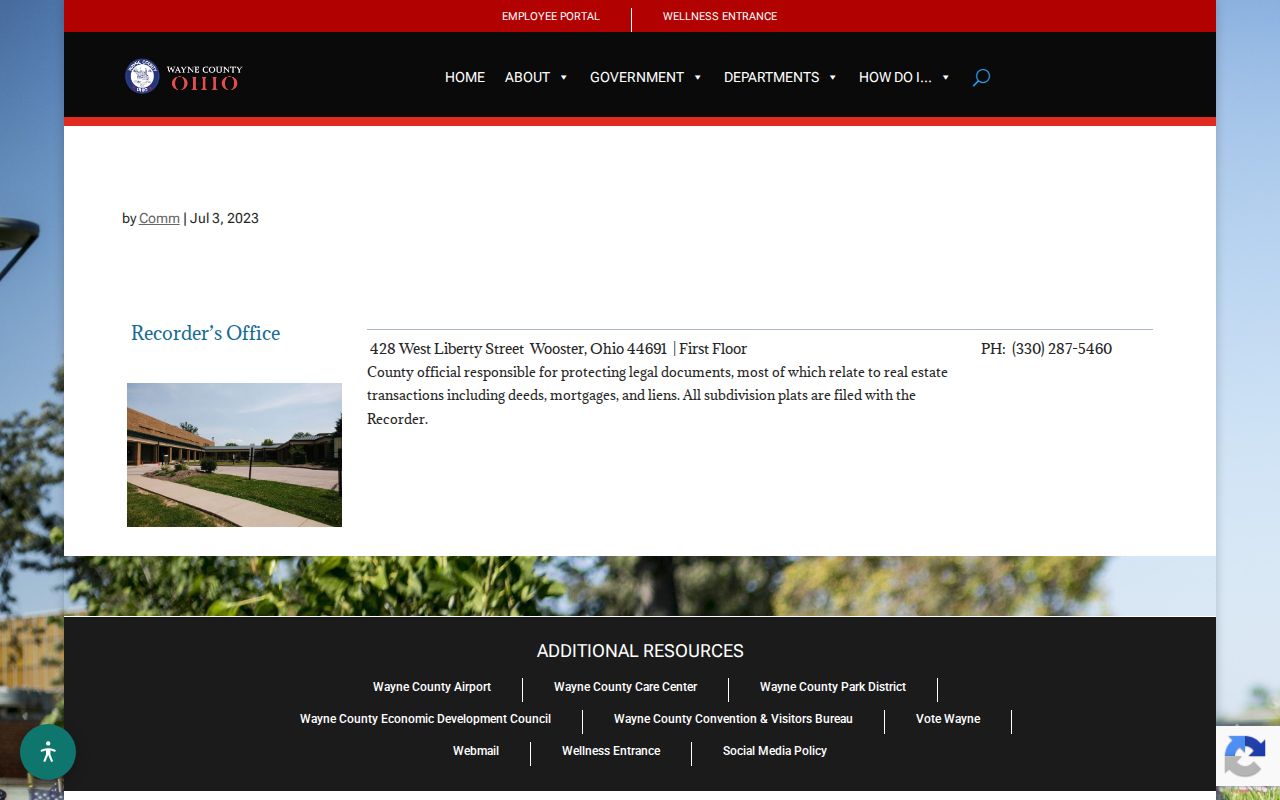
The counter is especially useful when a transfer clue needs to be matched to a book, image, microfilm reel, or original recorded volume.
Wooster Previous Residents Map Changes
Before attaching a directory name to a house, test the address against the physical record. WCPL links Ohio Sanborn Fire Insurance Maps, and the Wooster Digital History Project identifies 1884 Sanborn views for both east and west downtown. The 1873 and 1897 atlases add ward and local-directory context. These materials can show a building footprint, street layout, block form, or use at a given time. They do not identify every person who lived there.
No formal citywide Wooster renumbering or renaming year was found in the researched local sources. Do not invent one to force a match. Compare the historical spelling, map date, ward or township, parcel legal description, and directory date. A road, alley, or later split parcel may explain an apparent mismatch more accurately than a guessed renumbering.
City records can provide a narrow fallback for a known address and date range. Wooster’s Law Division page links its public-records route; a defined request for a permit, zoning, or other City record is more useful than a broad name request. Permit information dates a municipal filing, not title or continuous occupancy.
Wooster public-records information is the local channel for a carefully described City record request.
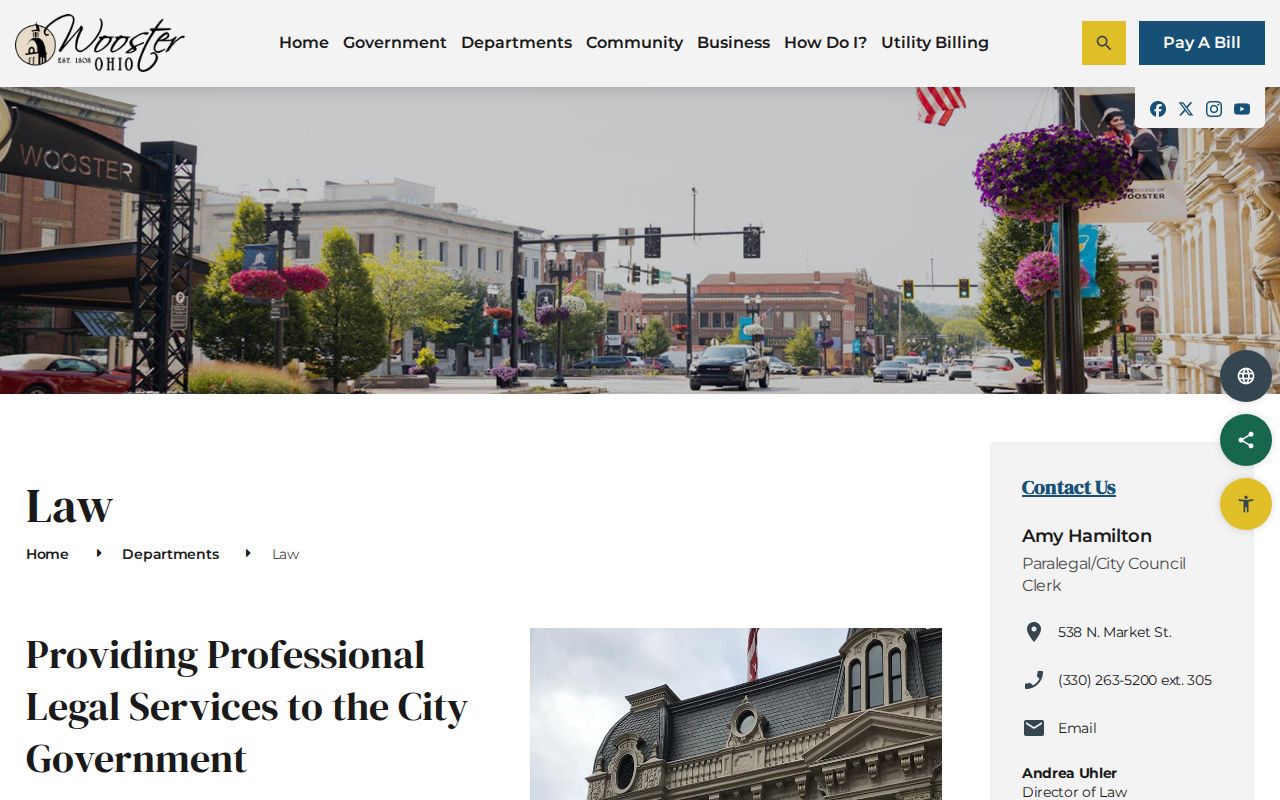
A specific address, record type, and date range make a City request easier for the correct custodian to locate.
Wooster Previous Residents in Directories
Owners are only part of a house history. The verified directory trail begins with 1873 and 1897 atlas material, then includes 1884-85, 1900, 1904, 1908-09, 1909-10, 1912-13, 1915, 1919, Walsh 1923-24, and 1948 points. Walsh’s 1923-24 edition is the documented street-directory lead. Other titles may provide a name listing, business information, or an address, but their format should be read literally.
Pair each found entry with the nearest released federal census, currently through 1950, then compare dated newspaper notices and probate or death clues. A census date and a directory publication date are not the same day. A newspaper notice is similarly a time-bounded observation, not proof that a household remained at the address. The historical collections themselves are described in the Wooster city directory collections.
- Write down the exact street number, spelling, and publication year from the directory or atlas.
- Check the Walsh 1923-24 street listing when the date fits, rather than assuming every directory is address-first.
- Compare the closest released census record and note its enumeration date separately.
- Search WCPL newspapers for a dated notice, then verify land, probate, or vital facts with the responsible custodian.
Note: A directory name, census household, and newspaper notice need matching dates and address context before they support one historical conclusion.
Wooster House-History Records at WCPL
WCPL’s Genealogy and Local History Room offers the practical fallback when a web index ends. Its resources include the Wayne County Deed Index, Sanborn maps, historical newspapers, obituary material, local maps and atlases, Ancestry Library Edition, and FamilySearch. The room is on the second floor of the Main Library at 220 W. Liberty Street. Detailed questions go by mail or email to genealogy@wcpl.info; the published desk number is (330) 262-0916 ext. 4670.
The library publishes modest research-service fees. An obituary request is $1 per individual including postage. Other mailed or emailed requests have a $1 minimum plus $0.25 per copy or scan, with postage where applicable. That route is useful for a precise citation, such as a directory year, deed reference, newspaper date, or map sheet. No separately titled WCPL house-history guide was located, but its listed resources form the local house-history toolkit.
The state’s historical-vital-record transfer rule is date-sensitive. Ohio Administrative Code 3701-5-11 permits transfers to Ohio History Connection after 125 years for births and 50 years for deaths and certain marriage or divorce abstracts. It is a preservation rule, so access should still be confirmed with the current custodian.
The Ohio historical vital-record transfer rule explains why a dated death or marriage clue may point to an archival custodian.
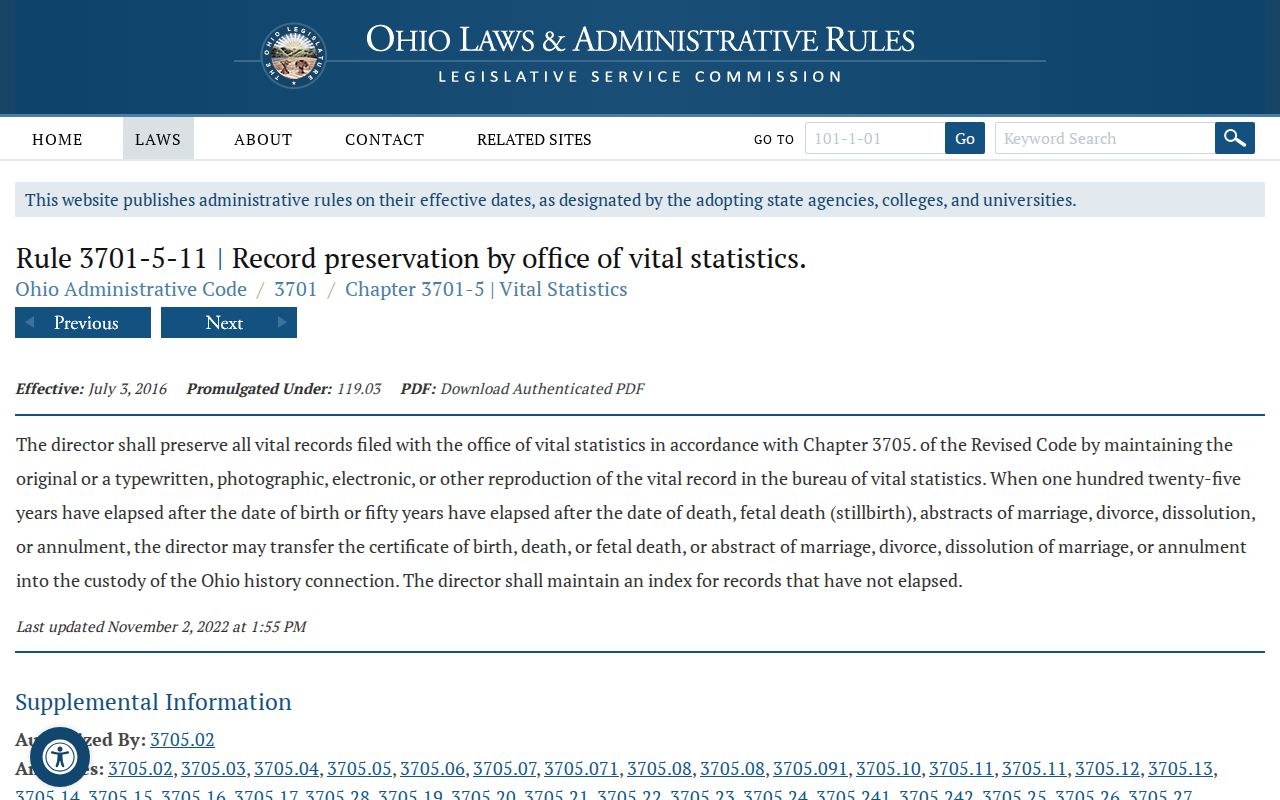
Confirm the present access rule before requesting a record, because a transfer interval does not establish what a current office will release.
Wooster Records Have Real Gaps
Early Wayne County research has a documented continuity warning. A law-library history reports a courthouse fire during a term in 1828, with some records lost. Later descriptions disagree on whether the present courthouse was completed in 1878 or 1879. Those facts argue for a careful citation trail, not for filling a gap with a convenient assumption. Reconstructed sources, later deed or probate volumes, newspapers, and local archival collections may be necessary for an early question.
Modern court searching has its own boundary. Wayne County CourtView generally provides local public case information from 1995 forward, while older cases remain in office manual indexes and dockets. CourtView is not the official record. For a title or household question, use a court result only as a dated lead and ask the relevant court or clerk for the authoritative record path. The absence of a stated Recorder online cutoff is another reason to keep counter and library channels in the research plan.
Note: A missing online record may reflect a courthouse loss, manual index, archival custody, or imaging boundary rather than a missing historical event.
Lawful Wooster Previous Residents Research
House-history research works best when each record is used for its limited fact: a deed for a land action, a directory for a dated listing, a census for a released snapshot, and a map for physical context. Record the source and date beside every finding. For a discrepancy, ask the custodian to explain the document or use the correction channel rather than sharing a disputed claim.
Lawful use. Use Wooster previous-residents material for family history, estate research, property history, or personal curiosity. Respect Safe at Home protections and never use records to monitor, harass, contact, or harm a living person.